Diet & nutrition
How much protein do you need on weight loss treatment?
- Published
- 26 August 2026
- Updated
- 26 August 2026
- Clinically reviewed
- 26 August 2026
- Next review due
- 26 August 2027
The short answer
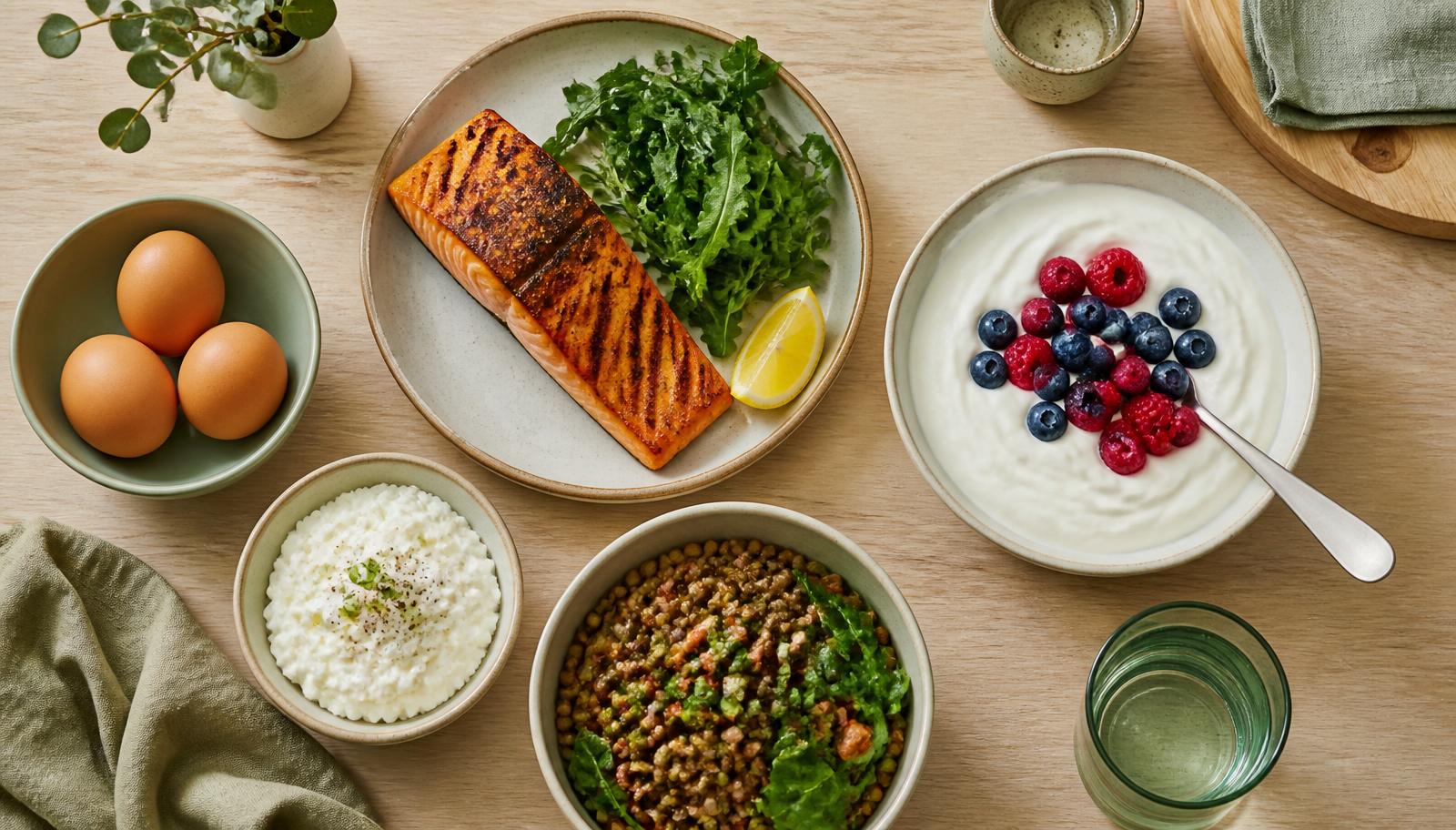
Aim for roughly 1.2 to 1.6 grams of protein per kilogram of your target body weight each day while losing weight on GLP-1 treatment. Without it, a significant share of the weight you lose can come from muscle rather than fat, which lowers your metabolic rate and makes the weight easier to regain.
Key takeaways
- 1Up to 40% of weight lost without resistance training and protein can be lean tissue.
- 2A practical target is 1.2-1.6g of protein per kg of target body weight.
- 3Spread it across the day: 25-35g per meal beats one large serving.
- 4Eat protein first at every meal — appetite runs out before the plate does.
- 5Two resistance sessions a week protect more muscle than protein alone.
Why protein matters more on treatment
GLP-1 and GIP medicines work by reducing how much you want to eat. That is the point — but a smaller appetite means a smaller protein intake unless you plan for it. Muscle is metabolically expensive tissue, and the body is happy to give it up during a deficit if it is not being asked to keep it.
A target you can actually use
| Target weight | Lower target | Upper target |
|---|---|---|
| 60kg | 72g | 96g |
| 70kg | 84g | 112g |
| 80kg | 96g | 128g |
| 90kg | 108g | 144g |
Use your target weight rather than your current weight — it keeps the number realistic and stops it drifting upward as you lose.
Hitting it with a small appetite
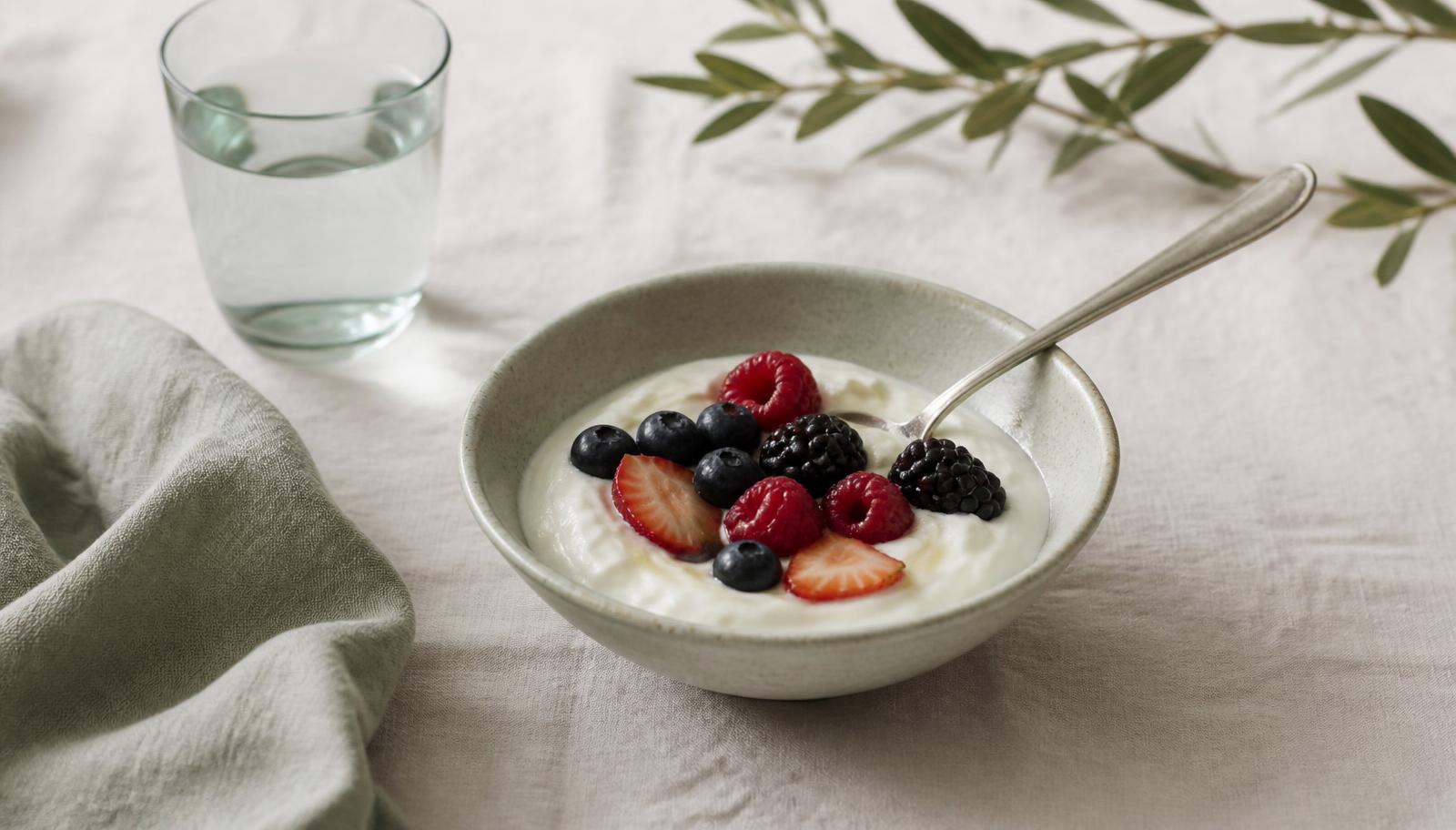
- Protein first, always. If you only manage half the plate, make it the half that counts.
- Greek yoghurt, cottage cheese, eggs and skyr are dense and easy when nothing appeals.
- A shake is a legitimate meal on a bad day, not a failure.
- Cold protein is often easier than hot when you feel nauseated.
- Batch-cook so the decision is already made when your appetite is low.
Speak to a clinician
This article is general information about UK-licensed medicines, not advice about your own treatment. If something you are experiencing worries you, or you are considering a change to your dose or medicine, speak to your prescriber before acting on anything you read here.
Questions people ask
Can you have too much protein?
For healthy adults, intakes in this range are well tolerated. If you have reduced kidney function or another condition affecting protein handling, get an individual target from your clinician rather than following a general guideline.
Do protein shakes count?
Yes. Whole food is preferable for fibre and micronutrients, but on treatment the practical question is whether you hit your target at all. A shake on a low-appetite day is far better than missing 40 grams.
Should I count calories as well?
Most people on treatment do not need to. The medicine handles the deficit. Tracking protein alone is usually enough structure, and it is a habit people can actually sustain.
What if I am vegetarian or vegan?
It is achievable but needs planning: soya, seitan, tofu, tempeh, pulses and a plant protein powder. Aim slightly higher than the lower target, since plant proteins are less efficiently used than animal sources.
Written by
ClariDay Editorial Team
Health writers
Our writers research and draft every article using the UK product licence, the published trial data and MHRA guidance. Nothing is published until a prescriber has checked it.
- Plain-English health writing
- Evidence summaries
Last updated 26 August 2026
Medically reviewed by
Mr Ali Salih
Independent Prescriber & Clinical Lead · GPhC 2212755
MPharm, Independent Prescriber
Ali is the clinical lead at ClariDay and a GPhC-registered independent prescriber. He reviews every treatment page and clinical article on this site for accuracy against the current UK product licences and prescribing guidance.
- Weight management
- GLP-1 and GIP therapies
- Prescribing safety
Reviewed 26 August 2026 · next review 26 August 2027
UK registered pharmacy and prescribers
Every clinical claim cited
Tracked, temperature-aware delivery